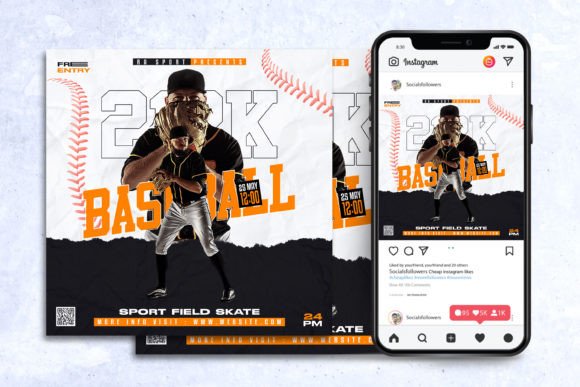
Evaluating the Baseball Match Day Social Media Post Template
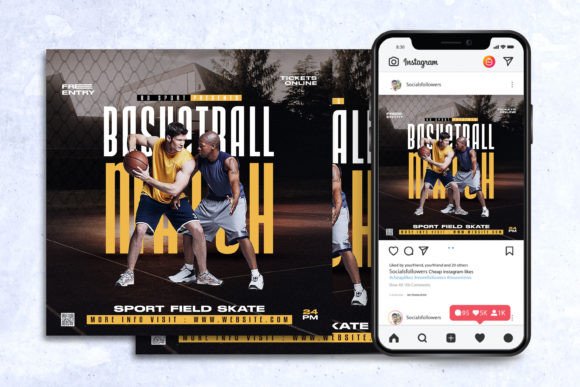
In the digital landscape of sports marketing, visual consistency and rapid content deployment are critical for engaging fans. A Baseball Match Day Social Media Post serves as a foundational asset for teams, leagues, and local clubs looking to communicate game schedules, player highlights, and live updates efficiently. For organizations managing social media channels without dedicated design resources, pre-made templates offer a practical solution. This article evaluates the utility, specifications, and strategic fit of a specific template design featuring high-resolution output and customizable elements.
Understanding the Asset Specifications
Before integrating a design tool into a workflow, it is essential to understand its technical parameters. The template in question is designed as a working file compatible with Adobe Photoshop CC. It adheres to a square aspect ratio of 1080x1080 pixels, which is the standard dimension for Instagram posts and Facebook feed images. This size ensures that the content displays correctly across major platforms without cropping or distortion.
A key specification for this resource is the resolution. While web graphics typically require 72 DPI, this template is provided at 300 DPI. This higher resolution offers significant flexibility. Although social media feeds compress images, having a source file at 300 DPI allows the user to downsample the image for web use while maintaining sharpness. More importantly, it permits the creation of larger formats, such as printed flyers or large-format digital signage, without pixelation. The color mode is set to RGB, which is appropriate for screen-based display, ensuring vibrant colors on monitors and mobile devices.
The template includes RCB (Red, Cyan, Blue) color settings, though in the context of digital design, this often refers to specific team branding palettes or a misunderstanding of CMYK vs. RGB. In this specific product description, "RCB Color" likely refers to a specific team theme or a placeholder for customizable brand colors. All main elements within the design are editable, meaning text layers, shapes, and background components can be modified directly within the software. However, users should note that image models are not included. This means the placeholders must be replaced with actual photography of players, stadiums, or action shots sourced separately.
Strategic Reasons for Adoption
Organizations may consider adopting a Baseball Match Day Social Media Post template for several strategic reasons. The primary driver is efficiency. Designing a unique graphic from scratch for every game day requires significant time and creative energy. By utilizing a pre-structured layout, social media managers can reduce production time from hours to minutes. They simply update the date, opponent name, score, and insert relevant imagery.
Consistency is another major factor. Fans develop an expectation for how information is presented. A standardized template ensures that every post shares a cohesive visual identity, reinforcing brand recognition. Whether posting about a home run, a pitching duel, or a final score, the familiar layout helps the audience instantly identify the content as official communication from the team.
Furthermore, accessibility plays a role. Not all sports organizations have access to professional graphic designers. A template that functions as a working file in Adobe Photoshop empowers staff members with basic design skills to produce professional-grade assets. This democratization of design capability allows smaller teams or amateur leagues to compete visually with larger franchises that have dedicated marketing departments.
Benefits and Tradeoffs
The benefits of using this specific template are clear. The high resolution (300 DPI) provides future-proofing for multi-channel campaigns. If a league decides to print a schedule poster based on the social media graphic, the source file is already suitable for print production. The fully editable nature of the text layers ensures that no hard-coded information limits the user's ability to adapt the message. Additionally, the square format maximizes visibility on mobile devices, where the majority of sports consumption occurs.
However, there are tradeoffs to consider. The reliance on Adobe Photoshop CC creates a barrier to entry for users who do not own the software or prefer alternative tools like Canva or Figma. While the file is editable within Photoshop, it cannot be easily opened in free alternatives without potential formatting issues. Furthermore, the absence of included image models means the user bears the responsibility of sourcing high-quality photography. A template is only as good as the images inserted into it; poor-quality photos will undermine the professional look of the design.
Another consideration is the learning curve. While the template simplifies the layout process, the user must still possess a functional understanding of Photoshop to manipulate layers, masks, and text properties effectively. For a complete novice, the file might feel overwhelming compared to drag-and-drop builders.
Situations Where the Template is a Strong Fit
This resource is particularly well-suited for mid-sized baseball organizations, such as collegiate teams, semi-professional leagues, or established youth academies. These entities typically have a designated social media manager who possesses some design literacy but lacks the time to create original art daily. The template allows them to maintain a high standard of visual communication without hiring external agencies.
It is also a strong fit for seasons where the volume of content is high. During a regular season, a team may need to post multiple times per week regarding games, player milestones, and community events. Having a reusable structure streamlines this workflow significantly. Additionally, if an organization plans to repurpose digital assets for physical merchandise or promotional materials, the 300 DPI specification makes this template a versatile investment.
When Alternatives May Be Preferable
There are scenarios where this specific template may not align with organizational needs. For teams with zero budget for software subscriptions, a cloud-based design platform like Canva might be more appropriate. These platforms often include built-in stock photography and require no installation, making them accessible to non-designers. If the primary goal is speed over customization, these alternatives might yield faster results.
Furthermore, if an organization has a highly specialized brand identity that deviates significantly from standard layouts, a custom-designed solution created by a professional designer might be necessary. Templates, even editable ones, impose certain structural constraints. If the team requires unique animations, complex video integration, or highly bespoke typography, a static Photoshop template will not suffice.
Finally, for very small groups with infrequent posting schedules, the cost and effort of learning Photoshop specifically for a single template download may outweigh the benefits. In such cases, simple graphic generators or manual text-overlay tools might be more efficient.
Practical Decision-Making Insights
When deciding whether to acquire a Baseball Match Day Social Media Post template, decision-makers should evaluate their current workflow and technical capacity. First, assess the availability of Adobe Creative Cloud licenses. If the software is not already part of the tech stack, the additional subscription cost must be factored into the budget.
Second, audit the available imagery. Since the template does not include models, ensure that the organization has a library of high-resolution, rights-cleared photos of players and facilities. Without quality source images, the template cannot achieve its intended impact.
Third, consider the long-term utility. Will this design remain relevant for multiple seasons? If the team rebrands frequently, a highly customized template might become obsolete quickly. Conversely, if the core brand elements remain stable, the investment in a robust, high-resolution file offers sustained value.
Ultimately, the choice depends on balancing the need for professional aesthetics against the resources available for design execution. For organizations seeking a middle ground between DIY simplicity and agency-level quality, this type of editable, high-resolution template presents a viable option. It bridges the gap between raw creativity and structured efficiency, enabling consistent fan engagement throughout the baseball season.